Stainless Steel vs Carbon Steel Fire Pits: What Lasts in Your Backyard
Stainless steel vs carbon steel fire pits is the choice most shoppers are really weighing when they search for a stainless steel fire pit. We don’t make stainless steel fire pits. We make heavy-gauge steel fire pits, and we chose that on purpose. If you came looking for stainless, here is what we would want to know before spending the money.
What Stainless Steel Does Well
Stainless resists rust well in most backyards, wipes clean, and holds its shine. For a fire pit that sits under a cover in a mild climate, it is a reasonable choice. Coastal homes need a higher grade than the common ones, because salt air can pit the standard grades.
Where Stainless Falls Short Around a Real Fire
- Heat marks. Stainless can take on blue, purple and gold tints once it gets hot enough, and they do not wash off with soap and water.
- Price. Stainless often costs two to three times what carbon steel does, so a stainless pit at the same price tends to be made from thinner metal.
- Thin metal moves. Light-gauge sheet is more likely to warp under a hot fire. Thickness is what keeps a bowl round, and thickness is expensive in stainless.
Why We Build in Heavy-Gauge Steel
Thick steel holds its shape under a hot fire, and it costs less per pound, so we put the money into thickness instead of shine. Our fire pits are made from approximately 1/4-inch plate steel, welded together in the USA and backed by a lifetime warranty.
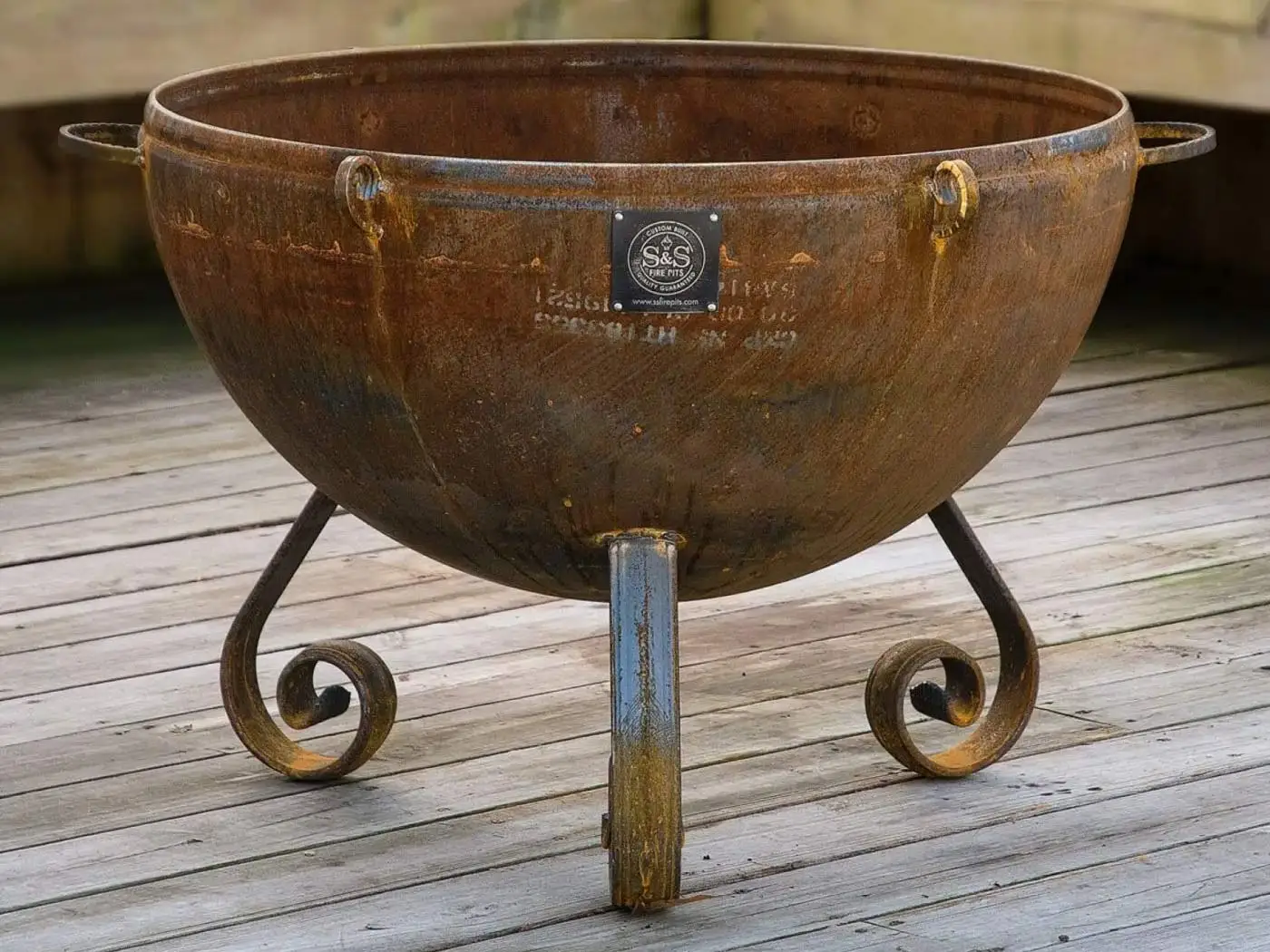
Steel this thick oxidizes slowly. The rust-colored layer that forms on the surface is the patina, and the thick plate behind it is what slows the process down.
The color deepens over the first weeks and months and keeps changing with the weather. It is a look people choose, not damage.
What To Expect, Honestly
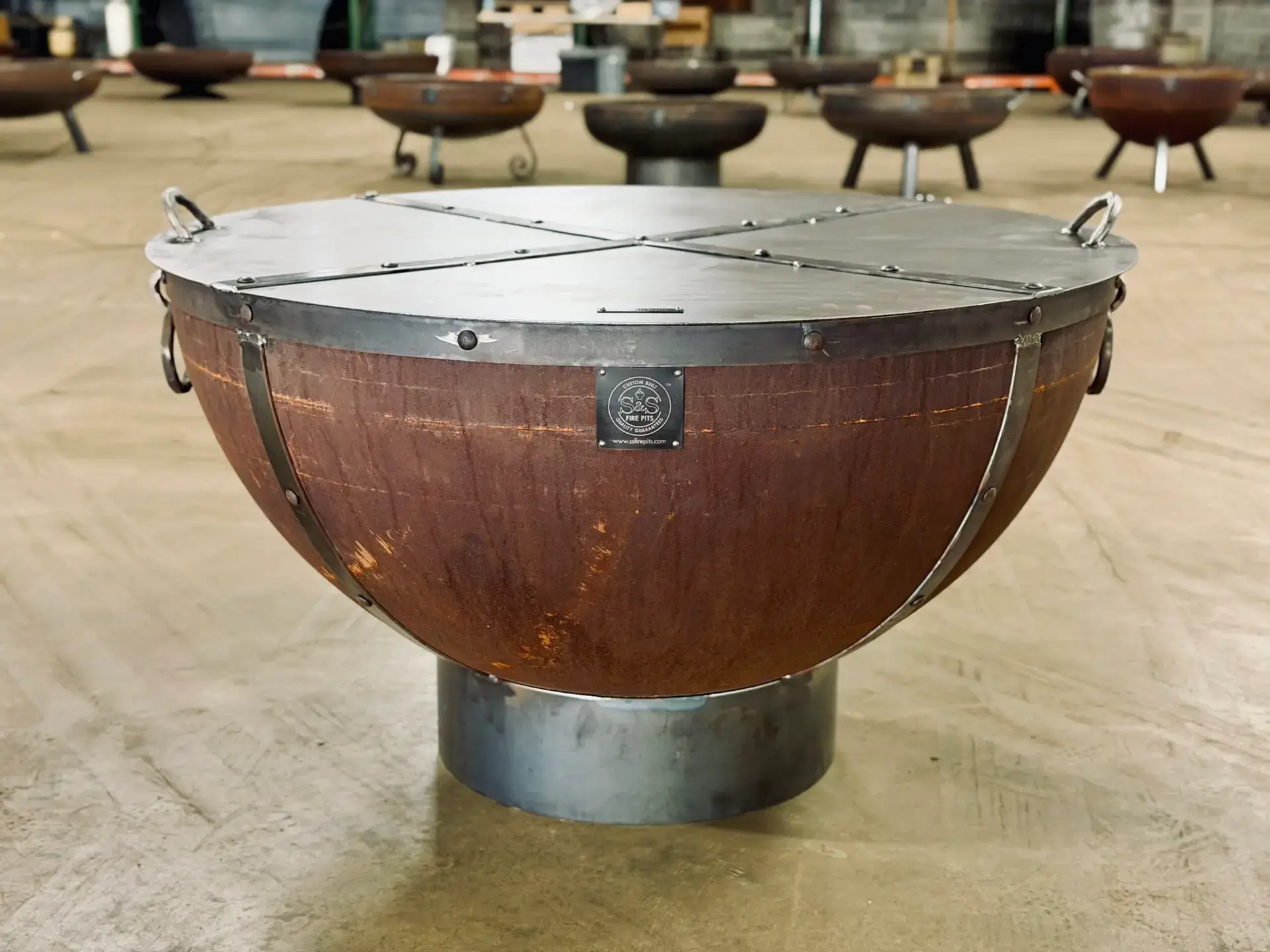
- Steel changes color. A new pit starts bright and settles into a deep brown over time.
- It can leave rust-colored marks on whatever it sits on. Set it on gravel, a stone slab or a fire-rated pad you don’t mind staining.
- Standing water is steel’s enemy. Our pits are built to drain, and a lid or cover helps in wet seasons.
- Salt air and constant dampness slow or prevent a stable surface. Tell us where you live and we will tell you whether it is a fit.
Stainless vs Heavy-Gauge Steel at a Glance
| Stainless | S&S Heavy-Gauge Steel | |
|---|---|---|
| Look over time | Stays bright, can heat-tint | Deepens to brown |
| Price for the same thickness | Higher | Lower |
| Warping | Higher risk in thin gauge | Thick plate holds its shape |
| Upkeep | Wipe down | Let it weather |
| Rust-colored runoff | No | Yes, onto the surface below |
How To Choose
Pick stainless if you want a bright, modern finish, you will keep the pit covered, and you are happy to pay more for thinner metal. Pick heavy-gauge steel if you burn real wood, want a pit that keeps its shape year after year, and like a finish that gets better with age. Either way, ask for the actual plate thickness before you buy. A heavier pit in any metal will outlast a lighter one.
Ready to see what heavy-gauge steel looks like in person? Browse our heavy-duty steel fire pits, read what owners say, or see how to care for a steel fire pit.
Common Questions
Does carbon steel rust through?
Any steel will keep rusting if it stays wet, which is why drainage and placement matter. Our pits are made from approximately 1/4-inch plate, which slows the process down significantly.
Can I speed up the color change?
Rain does it on its own. A mist of saltwater and vinegar works faster; wear gloves and eye protection.
Is a steel fire pit safe on a patio?
Set it on a heat-resistant, non-staining surface and keep it clear of anything that burns.
Do you offer a warranty?
Yes. Every S&S fire pit carries a lifetime warranty. See the FAQ for terms.
