
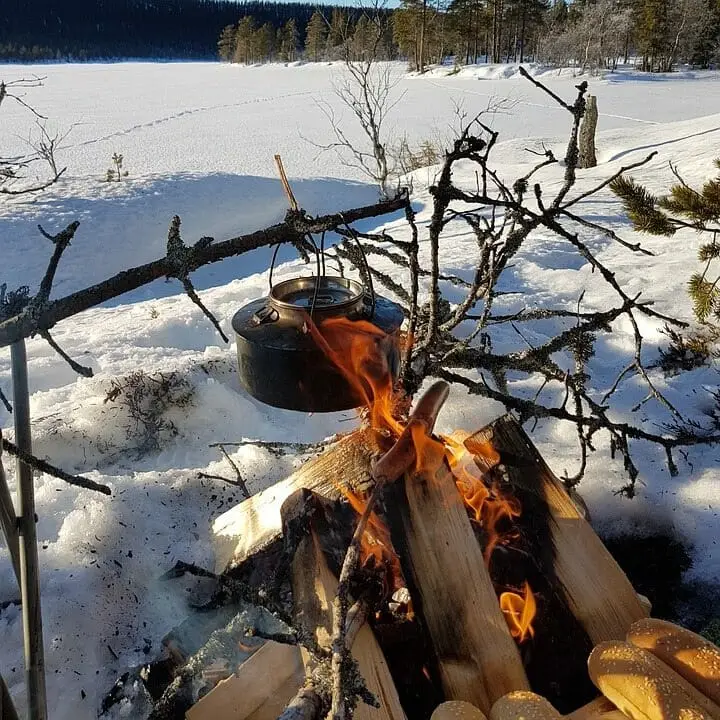
 Wouldn’t it be great if there was an abundance of dry, perfectly-stacked firewood waiting for you in the woods of favorite campsite? Building a campfire is an essential part of camping. It provides warmth, light, cooking fuel, and a social-friendly place for campers to gather around. But you’ll need dry, not wet, firewood to build a campfire. If the ground is wet from rain or snow, you may have trouble locating dry firewood.
To find dry firewood in a wet environment, campers can search under dense forest canopies where rain is blocked, or around fallen trunks that remain propped up and protected from rot. Another effective method involves splitting larger, wet pieces of wood to access and shave off the dry material from their centers. Alternatively, bringing pre-packed dry firewood from home in a waterproof bag ensures a reliable fuel source for campfires.
How to find dry firewood by searching under the canopy?
To begin your search for dry firewood, head for the forest canopy, paying close attention to the area around the base of trees where it’s sheltered by the canopy. Some rainfall will inevitably break through the canopy and hit the ground. Assuming the canopy is thick and dense, however, it should block out most of the rain, keeping any stray branches and firewood dry underneath.
How can fallen trunks be a source of dry firewood?
Many survivalists and wilderness experts also recommend looking for dry firewood around fallen trunks. When large trunks fall, they’ll often remain propped up against a nearby tree, protecting them from rot. You can easily harvest these trunks for use in your campfire. Just remember to look for snakes and other critters that could be lurking underneath.
Cut Dry Firewood Out of Wet Wood
Using nothing more than a knife, you can often harvest dry firewood from wet wood. Basically, this involves splitting a medium-sized piece of firewood down the middle and shaving off large, thin pieces of the dry material from the center. To split a piece of firewood, place the blade of your knife against one end and use a separate piece of wood to “hammer” it down. When done correctly, the wood should split, revealing the center. With the center exposed, you can shave dry pieces of wood for use in your campfire. These pieces will likely be small, however, so don’t expect to build a raging bonfire.
Why should you bring your own dry firewood from home?
Of course, you can always bring your own firewood from home instead. Assuming you aren’t hiking several miles into the deep wilderness, you can probably pack enough firewood for at least one night. And if you’re worried about it getting wet, place it a large waterproof plastic bag for added protection.
If you have any questions regarding how an S&S Fire Pit can enhance your outdoor living space; We can help. https://ssfirepits.com/contact/
